

Allergy Patch Testing
in Pioneer Valley

Understand What’s Causing Your Skin Reactions
If you’ve been dealing with an itchy rash, irritated skin, or recurring allergic reactions, you may be reacting to something you touch every day — from metals to skincare ingredients. At Pioneer Valley Allergy, our patch testing service helps identify the specific substances that trigger your symptoms, leading to an accurate diagnosis and effective treatment plan.
Our board‑certified healthcare providers use advanced allergy skin tests, including skin patch tests, skin prick tests, and blood tests, to accurately diagnose allergic conditions such as contact dermatitis, drug allergies, and food allergies.
How Patch Testing Works
A patch test usually takes place over about a week and involves two to three visits to our medical office.
-
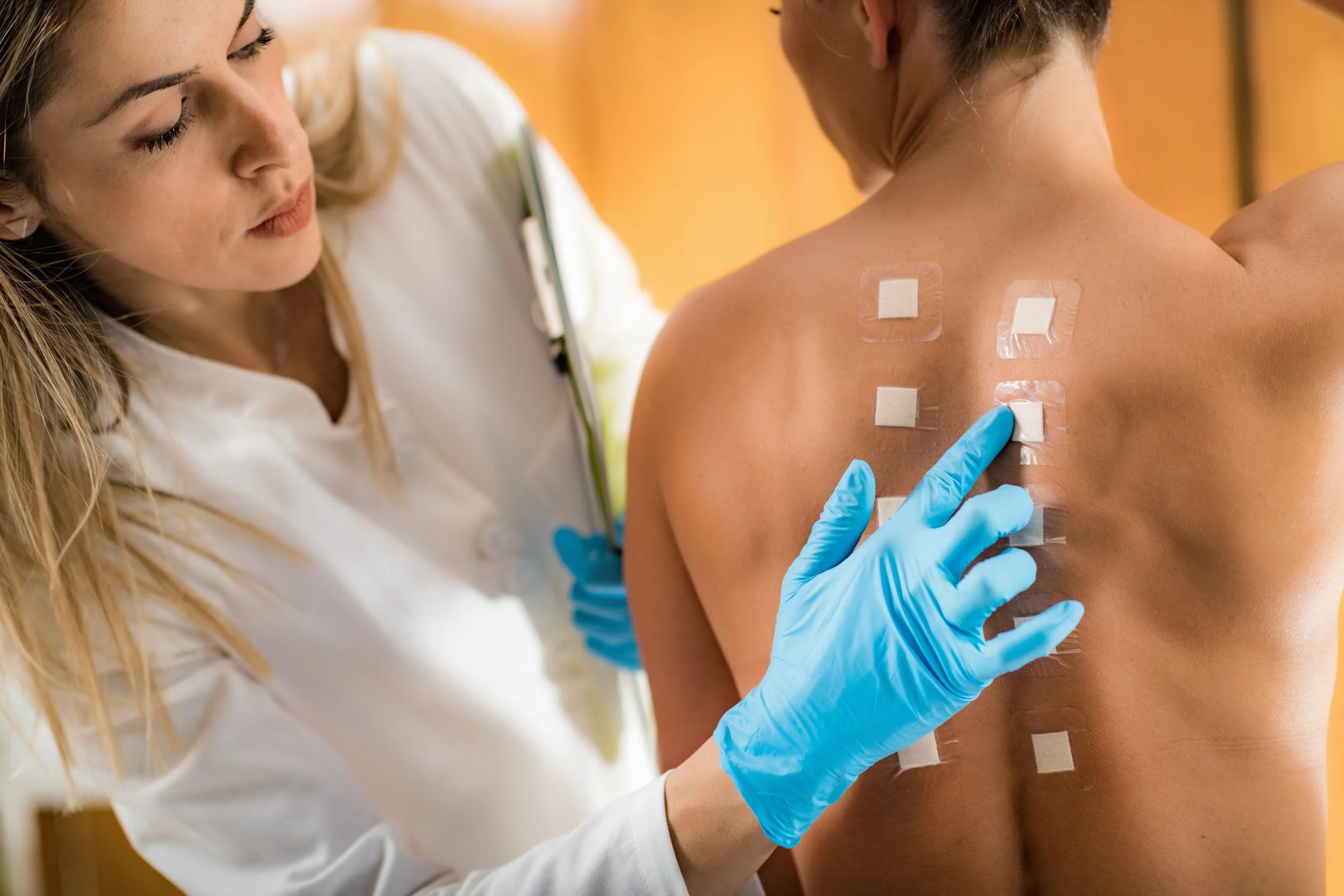
Day 1 – Application:
• Patches containing tiny amounts of potential allergens are placed on your back or upper arms.
• Each patch contains 10–12 substances in a gel or ointment base.
• The test area is covered with hypoallergenic tape to prevent movement.
• You’ll be asked to keep the patches dry — no sweating, swimming, or showers for 48 hours — to ensure accurate results.
-
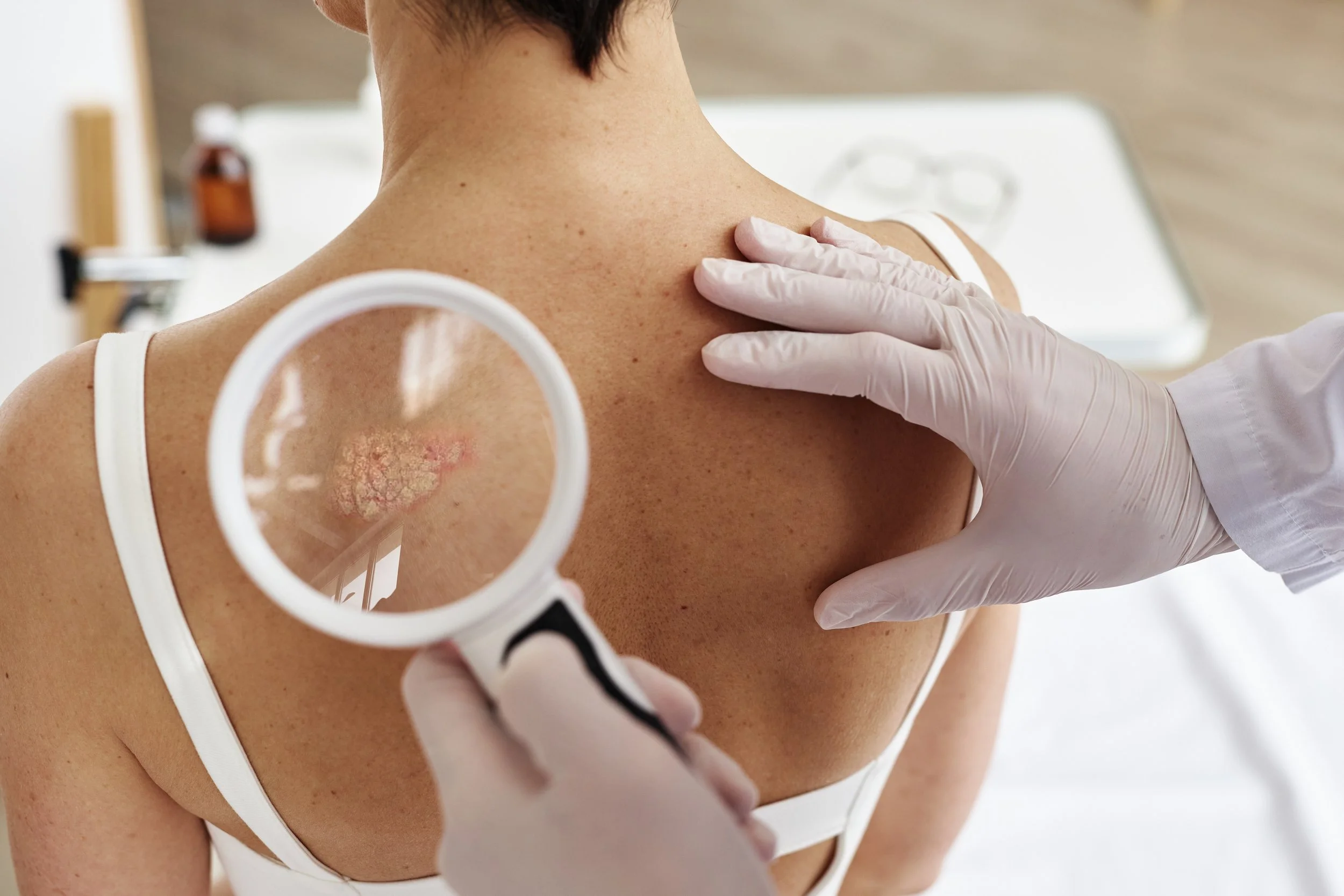
Day 3 – First Reading:
• After two days, the patches are removed.
• Our team examines the test site for any positive reaction, such as redness, swelling, or an itchy rash.
• These early reactions can indicate sensitivity to a particular allergen.
-
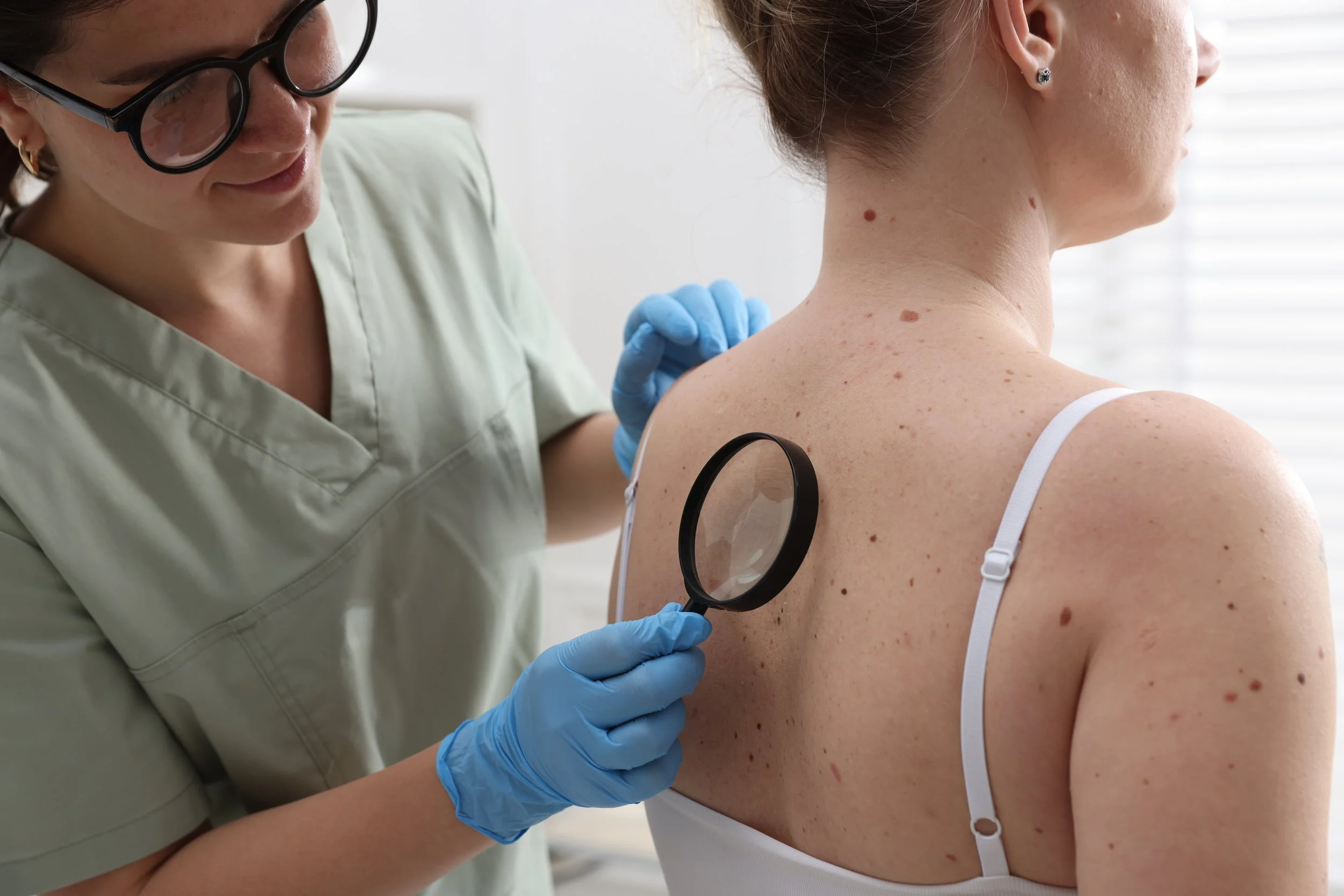
Day 5 or 6 – Final Reading:
• You’ll return to the clinic for a final evaluation.
• Delayed allergic reactions may appear as small, red, mildly itchy patches beneath the tested areas.
• Your doctor reviews the test results with you and discusses next steps.

What to Expect During and After Testing
Patch testing is generally safe, but mild skin irritation or itching is common at the test site.
A positive reaction may appear as a red, itchy, swollen bump — sometimes called wheals.
Any irritated skin or discoloration usually fades within a few days.
Severe allergic reactions, such as anaphylaxis, are extremely rare but can occur. Our clinic has emergency equipment and trained staff available at all times.
After the test, avoid sun exposure, tanning beds, steroid creams, and antihistamines until your provider confirms results for the most accurate diagnosis.
Frequently Asked Questions
-
Patch testing is a safe and reliable way to identify contact allergens — the substances that trigger skin reactions after contact. This type of allergy test is different from a skin prick test or intradermal test, which check for immediate allergic responses like asthma or hay fever. Instead, a skin patch test detects delayed allergic reactions, which can take several days to develop.
Common allergens tested include:
Metals such as nickel, cobalt, and gold
Fragrances, preservatives, and cosmetics ingredients
Topical medications and cleaning chemicals
Personal care products and soaps
Providers often use standardized sets like the North American Contact Dermatitis Group panel, which includes dozens of common allergens found in daily products.
-
Many patients live with chronic eczema, rashes, or itching without realizing they’re caused by a particular allergen. Without testing, treatment often focuses on masking symptoms instead of eliminating the cause.
Patch testing helps us:
Identify the exact substances triggering your allergic reactions
Develop a personalized allergen avoidance plan
Recommend medications or additional tests (like blood-based Immunoglobulin E (IgE) testing) when needed
Accurately diagnose allergic conditions to prevent unnecessary long‑term medication use
Information from allergy tests allows our healthcare providers to create a plan that includes allergen avoidance, lifestyle changes, and targeted medications for lasting relief.
-
To ensure accurate results, follow these guidelines before your appointment:
Keep the test area clean and dry.
Avoid tanning beds, lotions, and topical steroids.
Let your provider know about all medications you’re taking.
-
You may benefit from patch testing if you experience:
Unexplained itchy rashes or eczema
Irritated skin after using certain soaps, cosmetics, or jewelry
Reactions to medications or topical creams
Chronic skin symptoms that don’t respond to standard treatments
If you’re searching for allergy patch testing near me, our experienced team at Pioneer Valley Allergy offers a full range of skin tests to help determine your triggers and guide effective treatment.
Patch Testing vs. Other Allergy Tests
| Test Type | Detects | Best For | Timing of Reaction |
|---|---|---|---|
| Patch Test | Delayed skin reactions to contact allergens | Metals, fragrances, cosmetics, topical meds | 48–96 hours |
| Skin Prick Test / Scratch Test | Immediate allergic reactions | Foods, insect venom, pollen, environmental allergies | 15–20 minutes |
| Intradermal Test | More sensitive for airborne and drug allergies | Environmental allergies, insect venom | 15–20 minutes |
| Blood Tests (Specific IgE) | Measures antibodies to allergens | Severe allergic reaction risk, systemic allergies | 1–2 days (lab results) |
Each type of allergy skin test provides unique insights. Your doctor will determine the best combination to accurately diagnose your condition based on your medical history, symptoms, and exposure patterns.
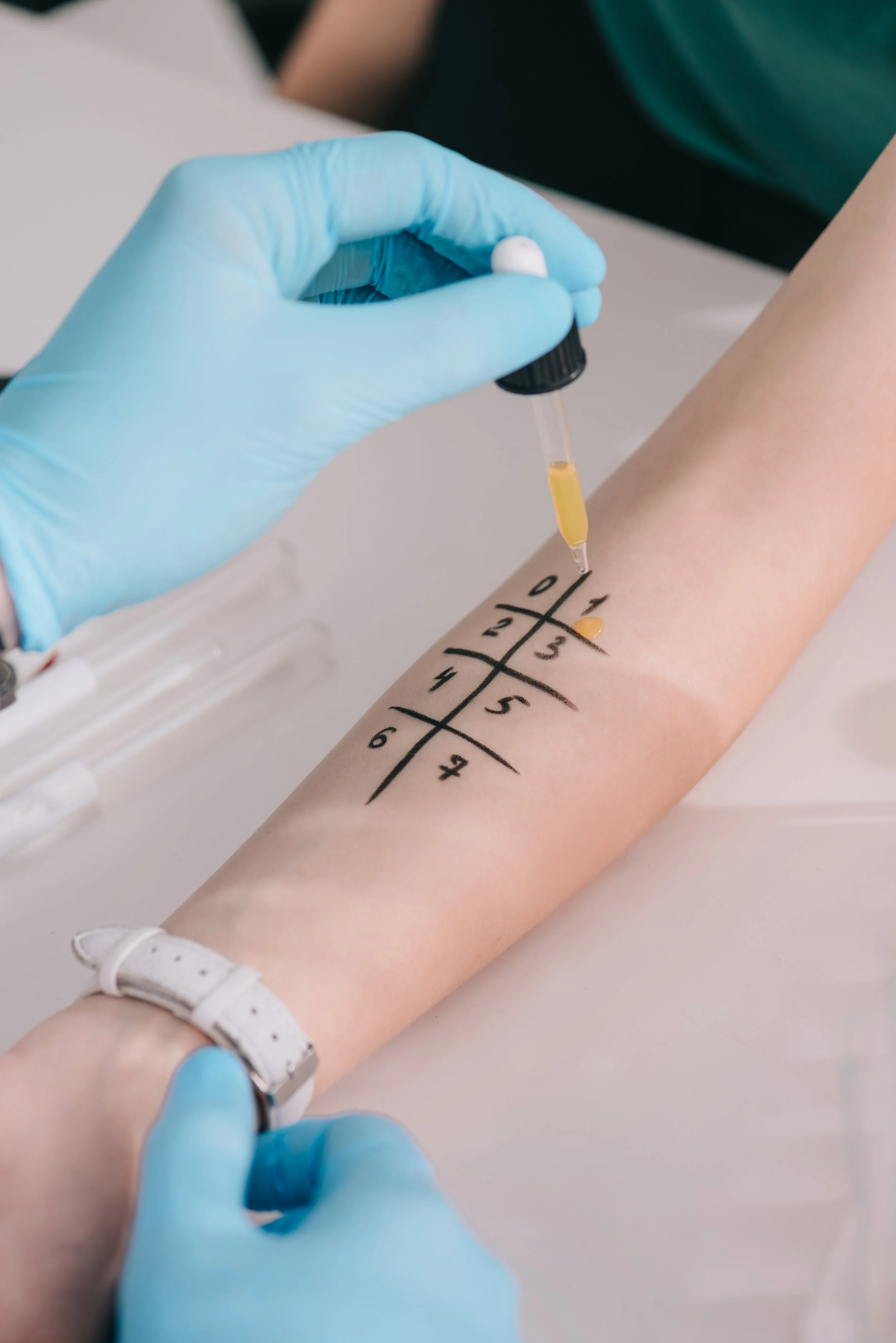
Schedule Your New Patient Patch Testing Appointment
Don’t let allergic skin reactions affect your daily life. The sooner we identify your triggers, the sooner you can start feeling better.
Contact Pioneer Valley Allergy today to book your new patient patch testing appointment.
📞 Call: (413) 628-5187
📍 Location: 212 Southampton Rd Unit B, Westfield, MA 01085